A split washing-machine hose or a tired water heater rarely announces itself — it just floods. How appliance leaks start, what to do in 15 minutes, and how to prevent the next one.
The fast answer: the first 15 minutes
If water is spreading from an appliance, stop the supply first — everything else can wait a minute, the water cannot. A washing machine has hot and cold shutoff valves on the wall directly behind it; a dishwasher's valve is usually under the kitchen sink; a water heater has a cold-water inlet valve on top of the tank. Close the valve for the appliance that failed. If you can't find it, can't reach it, or it won't budge, go to the main shutoff where the water line enters the house — in most Maryland homes, in the basement near the front wall — and turn it clockwise.
Next, switch off power to the wet area at the breaker box if water is near outlets or the appliance itself, and unplug nothing while standing in water. Move rugs, boxes and anything absorbent out of the wet zone, blot what you safely can, and take photos and video of the appliance, the connections and every affected room before you clean up. That short record protects both your floors and your insurance claim — then call for extraction and drying, because the water you can see is only part of the problem.
The three appliances that flood the most homes
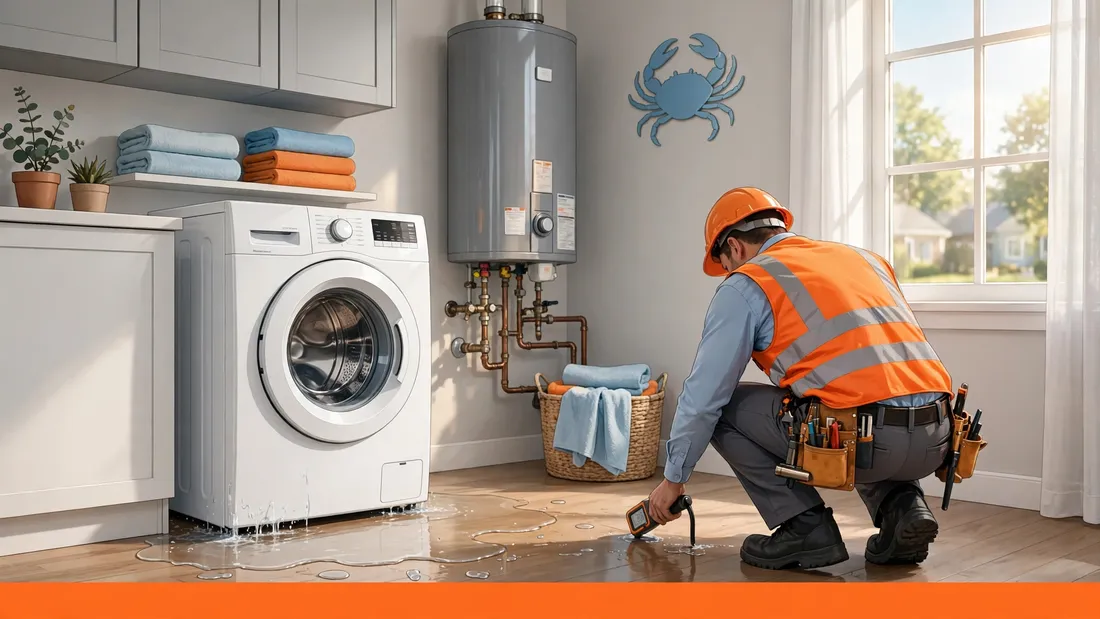
Washing machines are first on the list, and second-floor laundry rooms — common in newer homes in Rockville, Silver Spring and Columbia — make them the most destructive. Rubber supply hoses age, blister and finally split under full household pressure, often while nobody is home, and a failed drain hose or pump can empty a full wash load onto the floor in minutes. Because the machine sits against a wall, the leak also feeds straight into the wall cavity and the ceiling below.
Water heaters fail differently: slowly, then all at once. A tank in a Beltsville basement, garage or utility closet corrodes from the inside over years, weeping at the base long before it lets go — and when it does, it holds dozens of gallons plus a live supply line that keeps refilling it. Dishwashers are the quietest of the three: a worn door gasket, a cracked inlet line or a loose drain connection drips under cabinets and behind the unit for weeks, quietly rotting the subfloor and feeding mold before a single drop shows on the kitchen floor.
Why a 'small' appliance leak is rarely small
Appliance water doesn't stay where it lands. It runs under vinyl and laminate, seeps between hardwood boards, soaks the subfloor and wicks into drywall and insulation — materials that hold moisture long after the surface looks dry. In a warm Maryland home, mold can begin growing on damp material within a day or two, which is how a dishwasher drip discovered in November becomes a remediation job in December. The puddle is the symptom; the moisture map is the real damage.
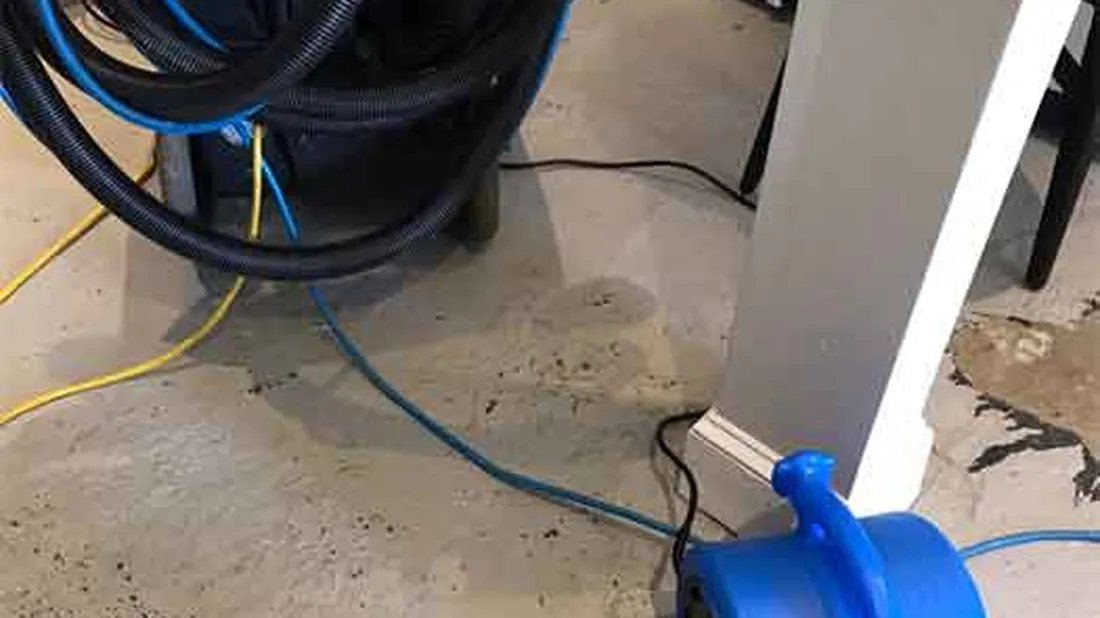
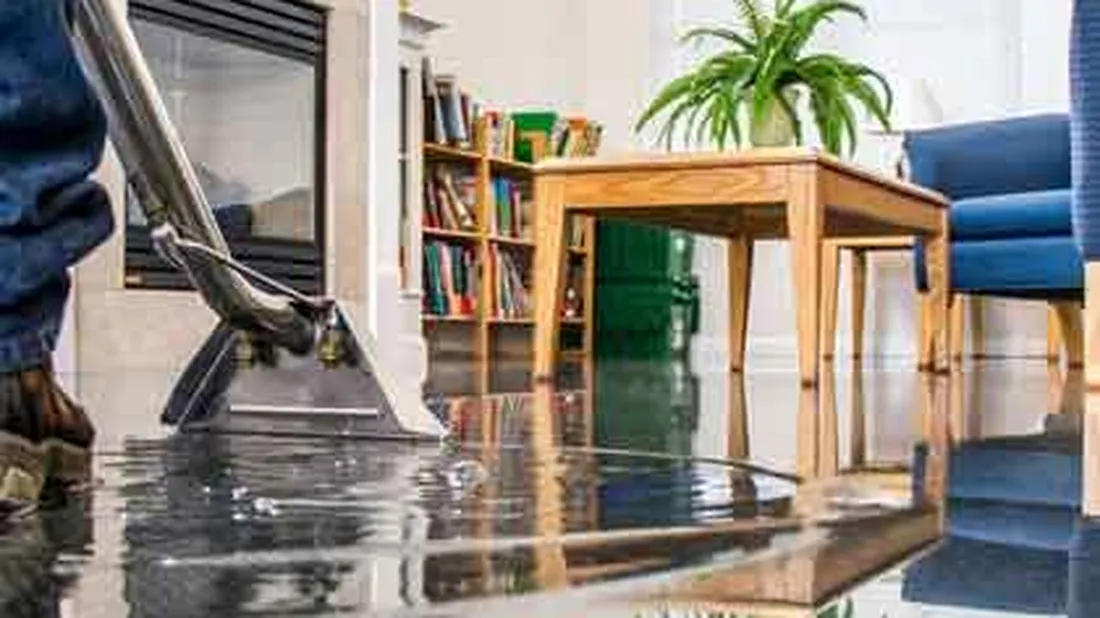
That hidden spread is also why professional drying starts with measurement, not mopping. Our IICRC-certified technicians use moisture meters and thermal imaging to find where the water actually traveled — under floors, inside walls, into the room below — extract what is standing, and dry to verified targets for each material. It matters for insurance, too: a sudden hose burst is the classic covered loss, while a drip that ran for months can be treated as neglected maintenance. Acting fast and documenting everything gives your claim its strongest start, and we bill carriers directly for covered work.
Prevention that actually works — and when to call
Most appliance floods are preventable with unglamorous habits. Replace rubber washing-machine hoses with braided stainless-steel lines and swap them on the manufacturer's schedule; check the valves and connections behind the machine twice a year. Put a drain pan and a simple water alarm under the water heater and the washing machine — an alarm that costs very little can save a floor. Look under the dishwasher and sinks monthly for dampness, staining or a musty smell, know where your main shutoff is before you need it, and close it when you travel for more than a few days.
If you find standing water, a warped floor near an appliance, or a water heater weeping at its base, don't wait to see if it gets worse — it will. Eagle Water Damage Restoration answers 24/7 from Beltsville, the assessment is free, and our crews handle extraction, structural drying, mold prevention and the insurance documentation as one job. Call (855) 809-6899 or send the lead form on this site and we'll take it from there.
Need This Handled?This guide covers Water Damage Restoration — the service behind this article. Free assessments, 24/7 response across Maryland: (855) 809-6899 or read about the service.
Water Damage Can't Wait — Neither Should You
Every hour of standing water means more damage and a bigger repair. Request your free assessment online and we'll call you back to confirm — or call now and a coordinator will dispatch a crew.