A sewage backup is a health hazard, not a mopping job. The safety order for Maryland homes — stop water use, keep people out, document, and call for cleanup.
The fast answer: stop using water, keep people out, call for help
If sewage is coming up through a floor drain, toilet or tub, do three things first: stop using water anywhere in the house, keep children and pets completely out of the affected area, and call for professional cleanup the same day. Do not flush, do not run the dishwasher or washing machine, and do not try to mop it up yourself. Every gallon you send down a drain has nowhere to go but back up, and the water on the floor is contaminated — this is a biohazard job, not a housekeeping job.
That order holds in Beltsville, Baltimore, Annapolis, Silver Spring and Columbia alike: close the door to the affected room if you can do it without walking through the water, turn off the HVAC if sewage reached a vent or the air handler so the system does not spread contamination, and photograph the lowest fixtures and every affected room from the doorway for your records. Then make the call — Eagle Water Damage Restoration answers 24/7 at (855) 809-6899, assessments are free, and we bill insurance carriers directly for covered work.
Why sewage is not just dirty water
Restoration work grades water by contamination, and sewage sits in the highest category. Water that backs up from a sewer line can carry bacteria, viruses and other pathogens, along with whatever chemicals and waste were in the line. That is why the risk is not only the puddle you can see: porous materials — carpet and pad, drywall that wicked moisture upward, insulation, cardboard and upholstered items — can hold contamination inside them after the surface looks clean.
Backups happen for a few predictable Maryland reasons: tree roots entering an older lateral line, grease and wipes building up until the line blocks, a collapsed or offset section of pipe, or municipal lines surcharging during heavy rain so the city's water looks for the lowest opening — often a basement floor drain or toilet. Homes in older neighborhoods around Baltimore and Beltsville, with mature trees and aging lines, see the root and aging-pipe versions most often, while any low basement can be the entry point in a storm.
The never-do list: mistakes that spread the problem
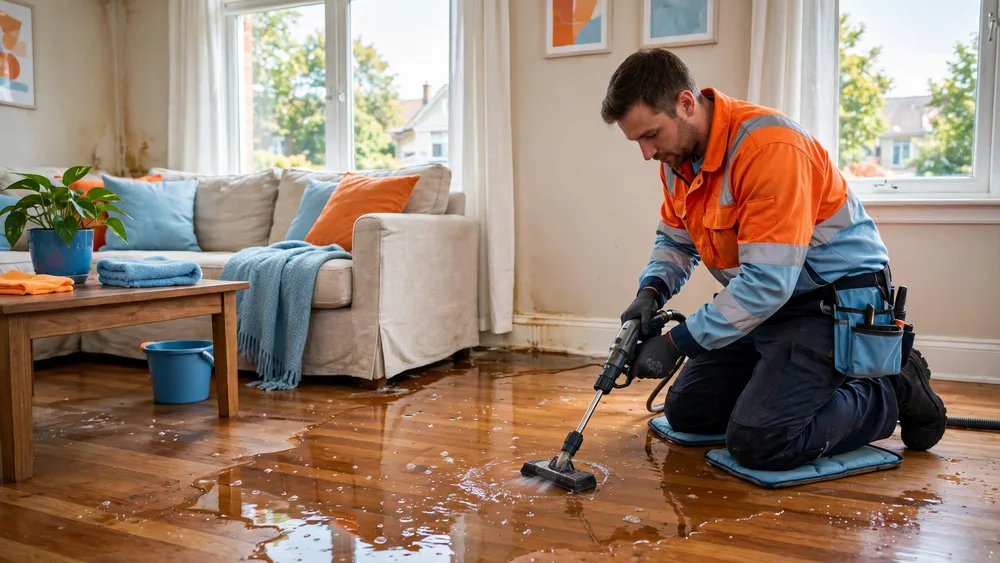
Do not use a household vacuum, shop vacuum or mop-and-bucket routine on sewage — home equipment is not sealed for biohazard work and can aerosolize contamination into the air you breathe. Do not run fans to dry it yourself for the same reason, do not walk through the area and then through clean rooms in the same shoes, and do not drag wet rugs or boxes through the rest of the house. Each of those moves takes a contained problem in one room and distributes it everywhere you went.
Do not pour bleach or strong chemicals down the drain hoping to clear it, do not use a drain snake if you do not know where the blockage is, and do not assume the problem is over because the water went back down. A line that backed up once is telling you something about roots, grease or capacity, and the moisture left inside walls and floors keeps working after the visible water is gone. If anyone in the home develops stomach or breathing symptoms after exposure, seek medical advice promptly and tell them what the exposure was.
What safe professional cleanup actually includes
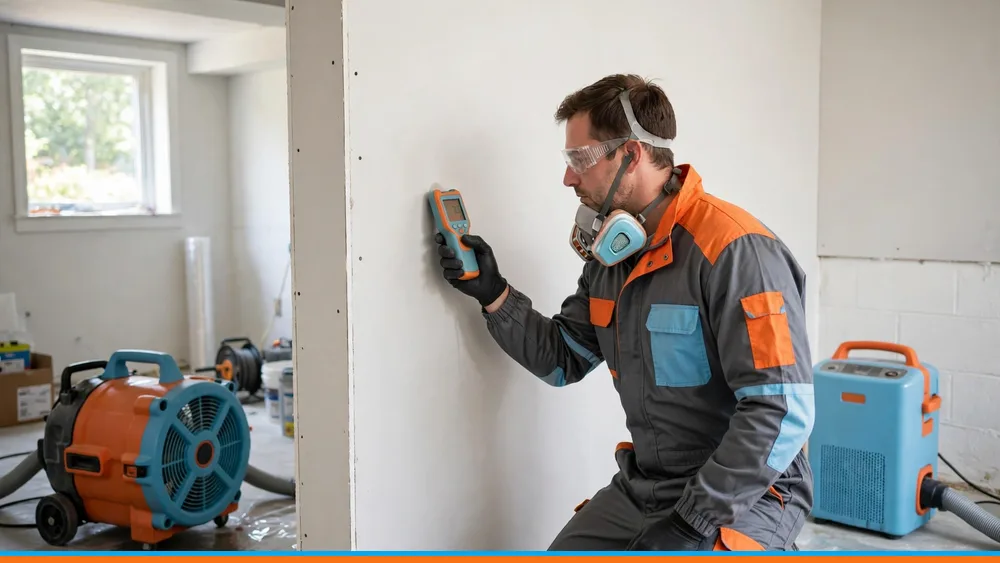
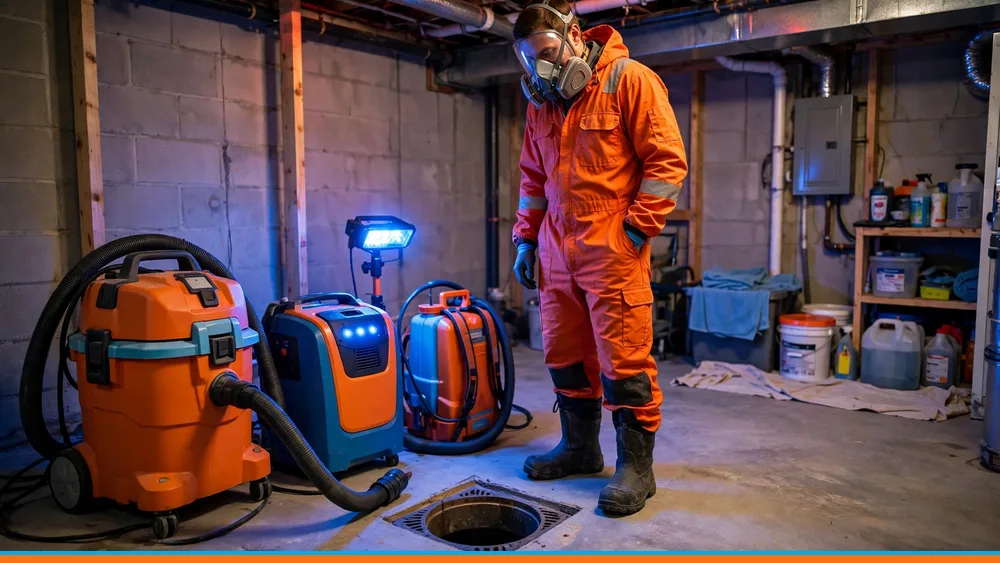
Our IICRC-certified crews treat a sewage loss as the biohazard job it is: protective equipment, containment of the affected area so clean rooms stay clean, extraction of contaminated water, and removal of porous material that cannot be safely cleaned — carpet, pad and drywall that wicked sewage are the usual examples. Hard surfaces that remain are cleaned and disinfected with professional-grade antimicrobial treatment, and the structure is then dried like any water loss, with moisture meters verifying targets rather than guesswork.
Documentation runs alongside the cleanup from the first photo. Sewer backup coverage usually comes from a specific endorsement on a homeowners policy, and carriers decide on records: the source, the affected rooms and materials, the scope of removal and the drying readings. We produce that record as a normal part of the job and bill carriers directly for covered work, so the safety work and the claim work are the same visit — not two separate projects for you to coordinate while a room in your home is off limits.
After cleanup: lowering the odds it happens again
Once the home is clean and dry, use what the backup taught you. A backwater valve on the main line is the single most effective protection against municipal surcharge — it closes when the city line pushes back and keeps that water out of your basement. Have older lines inspected for root intrusion if trees sit near the line, keep grease out of kitchen drains, and remember that wipes belong in the trash even when the package calls them flushable. If your lowest fixtures sit below street level, ask during the cleanup what your specific risk looks like — the answer differs by house, not by neighborhood slogan.
If drains are backing up in your Maryland home right now, do not wait for a second fixture to join in — backups rarely get smaller on their own. Call Eagle Water Damage Restoration at (855) 809-6899 or send the lead form on this site. We answer 24/7 from Beltsville, assessments are free, and our crews handle containment, extraction, disinfection, structural drying and the insurance documentation as one documented job.
Need This Handled?This guide covers Biohazard Cleanup & Disinfection — the service behind this article. Free assessments, 24/7 response across Maryland: (855) 809-6899 or read about the service.
Water Damage Can't Wait — Neither Should You
Every hour of standing water means more damage and a bigger repair. Request your free assessment online and we'll call you back to confirm — or call now and a coordinator will dispatch a crew.