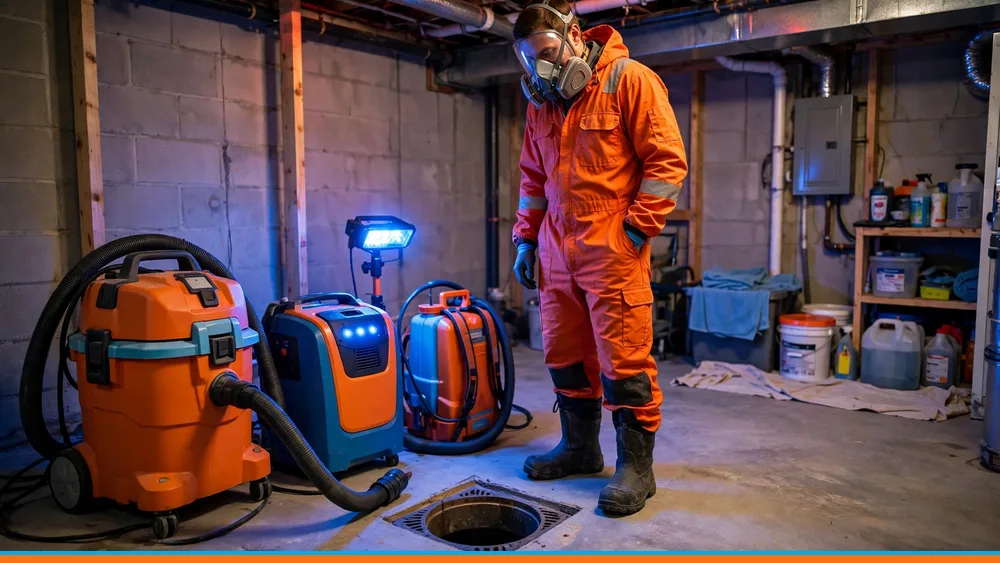
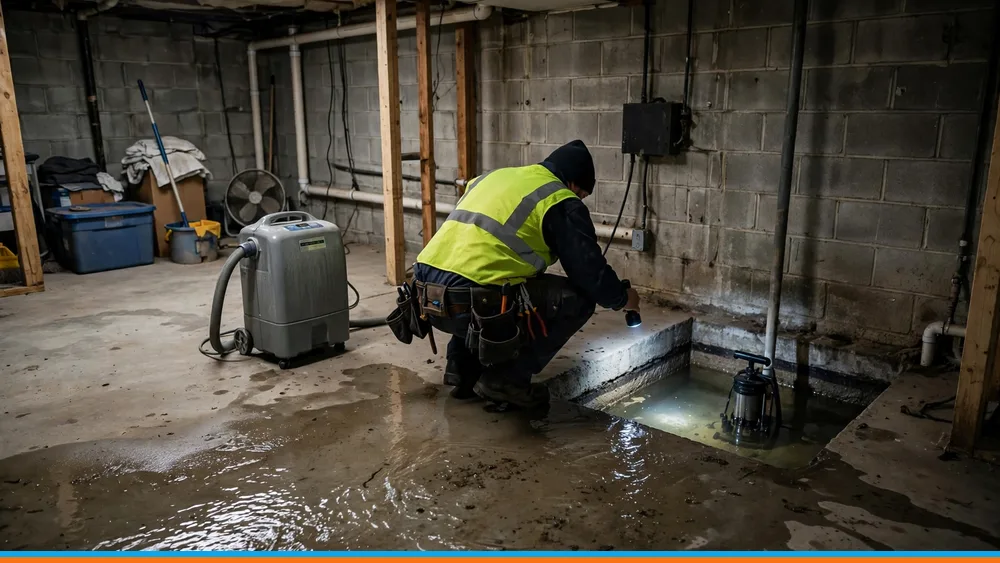
When a sump pump stops, a dry basement can flood in one storm. What to check first, how to limit the damage, and how to keep it from happening twice.
The fast answer: check power safely, move what matters, call early
If your basement is taking water and the sump pump is silent, work in this order: check whether the pump has power — from dry ground only — move belongings up off the floor, and call for extraction early. Do not wade to an outlet, do not stand in water to reset a breaker or unplug the pump, and do not assume a quiet pump means the water has stopped coming. Groundwater keeps rising as long as the storm or the water table pushes it, and a pit that overflows at midnight can cover a floor by morning.
That order holds in Beltsville, Rockville, Silver Spring, Columbia and Baltimore alike: if the pump's float is stuck against the pit wall or tangled in debris, freeing it from a dry spot can restart it — but if the motor hums without moving water, runs without stopping, or does nothing at all, treat it as failed. Photograph the pit, the waterline and every wet room, then make the call. Eagle Water Damage Restoration answers 24/7 at (855) 809-6899, assessments are free, and we bill insurance carriers directly for covered work.
Why sump pumps fail at the worst possible moment
A sump pump lives a hard, quiet life: it sits in a damp pit for months doing nothing, then is asked to run for hours during the heaviest rain of the season. The failures follow that pattern. Float switches stick or wear out, motors burn out after years of short cycling, check valves fail so pumped water falls back into the pit to be pumped again, and discharge lines clog, freeze or disconnect outside — so the pump runs faithfully while the water goes nowhere useful.
Power is the other classic failure, and it is built into Maryland weather. The storms that fill sump pits fastest are the same storms that knock out electricity across Prince George's, Montgomery and Howard counties, and a pump without power is just a hole in the floor. Add a tripped breaker or a pit full of debris that jammed the impeller, and most sudden floods turn out to have a mechanical story that started long before the rain.
The first hour after you find the water
Start with what water ruins fastest. Move electronics, documents, photos and anything cardboard up to a dry floor first, then upholstered furniture and rugs, and slip foil or wood blocks under the legs of pieces too heavy to move. Keep children and pets out of the wet area — basement water that came up through the floor or a drain is not clean water, even when it looks clear.
Then document before you clean. Record the pit, the pump and its outlet, the standing water and the waterline on walls, boxes and appliances. Keep receipts for any emergency purchase, and do not throw away the failed pump or damaged belongings until they have been photographed — that record guides the drying plan and supports your claim. Swapping in a replacement pump can slow the rise if conditions are safe, but never let a hardware run delay extraction: the water already on the floor is the damage, not just the water still coming.
What proper cleanup looks like after a pump failure
A flooded basement is a materials problem, not a mopping problem. Carpet and pad, the bottom edge of drywall, insulation and stored cardboard hold water against the structure long after the surface looks dry, and water that entered through the foundation can carry soil and contaminants with it. Our IICRC-certified technicians extract the standing water, remove material that cannot be safely dried, apply antimicrobial treatment where it is needed, and check inside wall cavities, where moisture wicks well above the visible line.
Structural drying then runs to verified targets, not to a calendar. Moisture meters and thermal imaging show where the water actually traveled — under flooring, into studs, behind finished walls — and equipment is sized and adjusted until readings say each material is dry. That verification is also the record your carrier reviews: sump pump and water backup coverage often depends on a specific policy endorsement, and a documented scope, photo record and drying log give the claim its strongest footing. We produce that record as a normal part of the job and bill carriers directly for covered work.
Keeping the next storm from becoming the next flood
Once the basement is dry, fix the failure you actually had — and add a second line of defense. Test the pump by pouring water into the pit until the float lifts and the pump cycles, and repeat that test a few times a year, especially before spring rains and hurricane season. Clear debris from the pit, confirm the discharge line carries water well away from the foundation, and know the pump's age: a unit that has served through many Maryland storm seasons has earned a planned replacement on a dry day, not an emergency one at 2 a.m.
A battery backup pump is the single upgrade that changes the ending, because it covers the most common failure of all — the power going out mid-storm — and a water alarm at the pit warns you while the problem is still inches deep. If your basement has flooded twice, ask during the assessment what the pattern says about grading, gutters and drainage. And if water is rising in your Maryland basement right now, call Eagle Water Damage Restoration at (855) 809-6899 or send the lead form on this site. We answer 24/7 from Beltsville, assessments are free, and our crews handle extraction, structural drying and the insurance documentation as one documented job.
Need This Handled?This guide covers Water Damage Restoration — the service behind this article. Free assessments, 24/7 response across Maryland: (855) 809-6899 or read about the service.
Water Damage Can't Wait — Neither Should You
Every hour of standing water means more damage and a bigger repair. Request your free assessment online and we'll call you back to confirm — or call now and a coordinator will dispatch a crew.