In Columbia, the costliest water damage often starts as a drip under a dishwasher, fridge or water heater. How to spot appliance leaks early and act fast.
The fast answer: a small drip is a big loss in slow motion
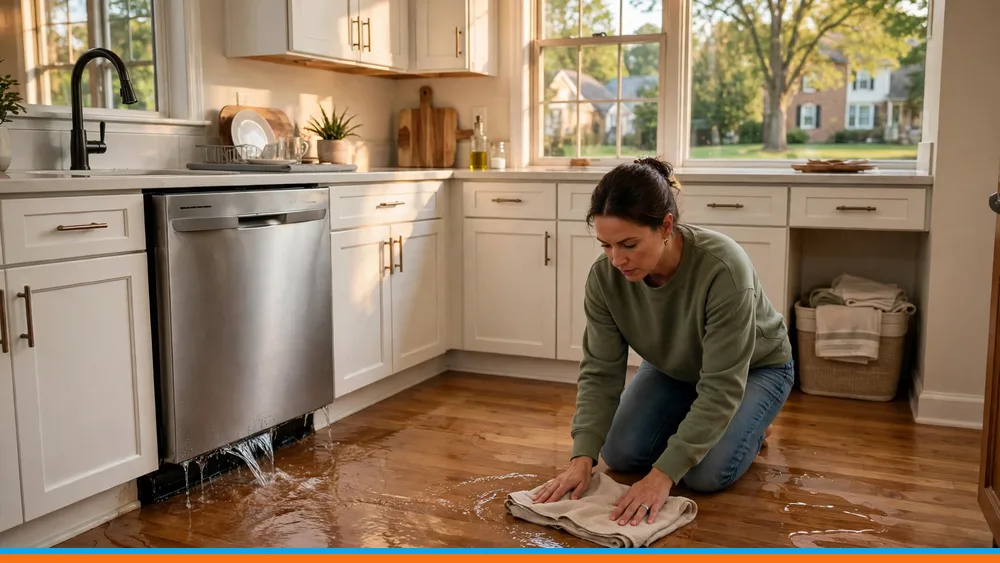
If you find water under a dishwasher, washing machine, refrigerator or water heater in your Columbia home, do not just dry the puddle and move on: turn off the appliance's water supply, move anything stored nearby off the floor, photograph the leak and the floor around it, and check how far the water has traveled. A drip that runs for weeks can soak subfloors, cabinets and the ceiling below more thoroughly than a burst pipe that is caught in an hour — it simply does it quietly.
That pattern is common across Columbia's villages, from Wilde Lake and Harper's Choice townhouses to single-family homes in River Hill and Long Reach: appliances age in place, supply lines and drain hoses age with them, and the first visible sign is often a warped floorboard or a musty smell, not a flood. Eagle Water Damage Restoration answers 24/7 at (855) 809-6899, assessments are free, our technicians are IICRC-certified, and we bill insurance carriers directly for covered work.
The four appliances that leak most — and where the water goes
Dishwashers leak at door seals, inlet valves and drain hoses, and because they sit in a finished kitchen, the water runs under cabinets and hardwood where nobody sees it until the boards cup. Washing machines fail at rubber supply hoses and drain connections; a second-floor laundry in a Columbia colonial sends that water through the ceiling of the room below. Refrigerator ice-maker lines are thin, brittle with age, and notorious for slow leaks that rot the floor behind a unit nobody pulls out for years.
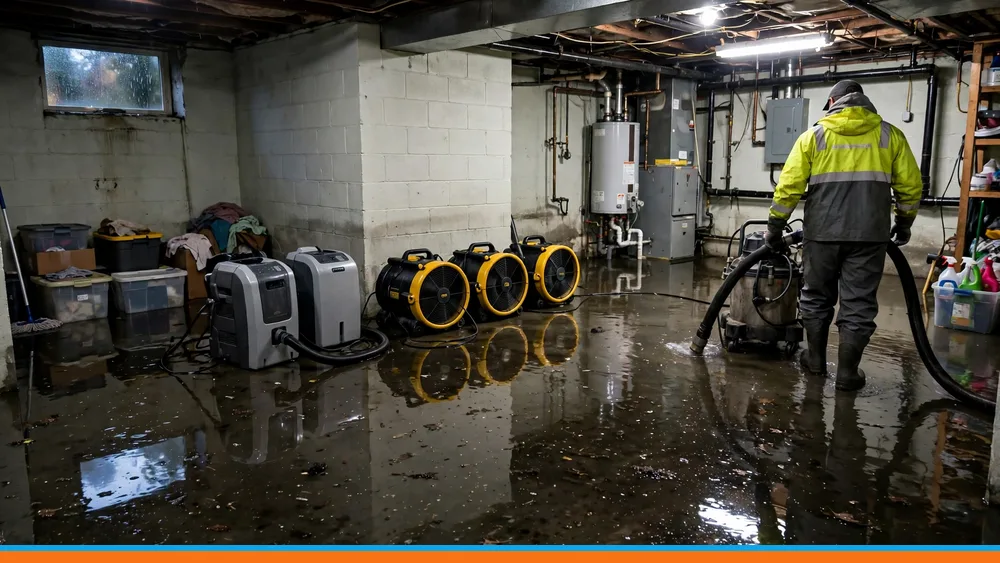
Water heaters leak differently: a tank that drips at a fitting today can split at a corroded seam tomorrow, releasing its full contents at once. In many Columbia homes the heater sits in a basement utility room or a garage-level closet next to finished space, so both versions matter — the slow drip that feeds mold behind stored boxes, and the sudden release that floods a finished lower level. Each appliance has the same lesson: the water you can see is the smallest part of where it went.
Signs an appliance leak has been running longer than you think
Trust the indirect evidence. Flooring that feels soft, spongy or newly uneven near an appliance; baseboards swelling or pulling away along one wall; a cabinet interior that smells musty when you open it; paint bubbling low on a wall that shares plumbing; or a water bill that creeps up with no change in use — each of those is a leak introducing itself late. In a townhouse or condo, a neighbor's ceiling stain below your kitchen or laundry room may be the first report you get.
Pull the appliance's surroundings into the open when you can do it safely: look under sinks and behind access panels with a flashlight, feel supply lines for dampness, and check the floor at the back corners, where water pools first. Do not slide a heavy unit across a wet floor or disconnect gas or electrical connections — photograph what you find, close the appliance's shutoff valve if it has one, and let the moisture map, not guesswork, decide what happens next.
What proper drying looks like after an appliance leak
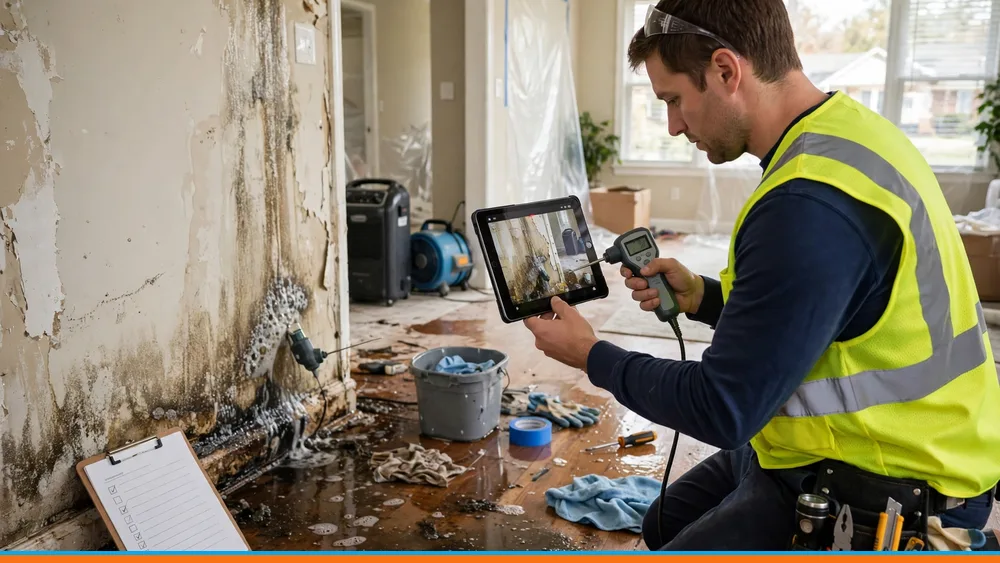
Because these leaks run long, the job starts with measurement. Our technicians map moisture with meters and thermal imaging — under hardwood and vinyl, inside the cabinet boxes and wall cavities behind the appliance, into the subfloor and the ceiling below — and that map decides what dries in place and what has to come out. Saturated particleboard cabinets, soaked insulation and pad that sat in gray water usually cannot be saved; solid wood, tile and drywall caught early often can.
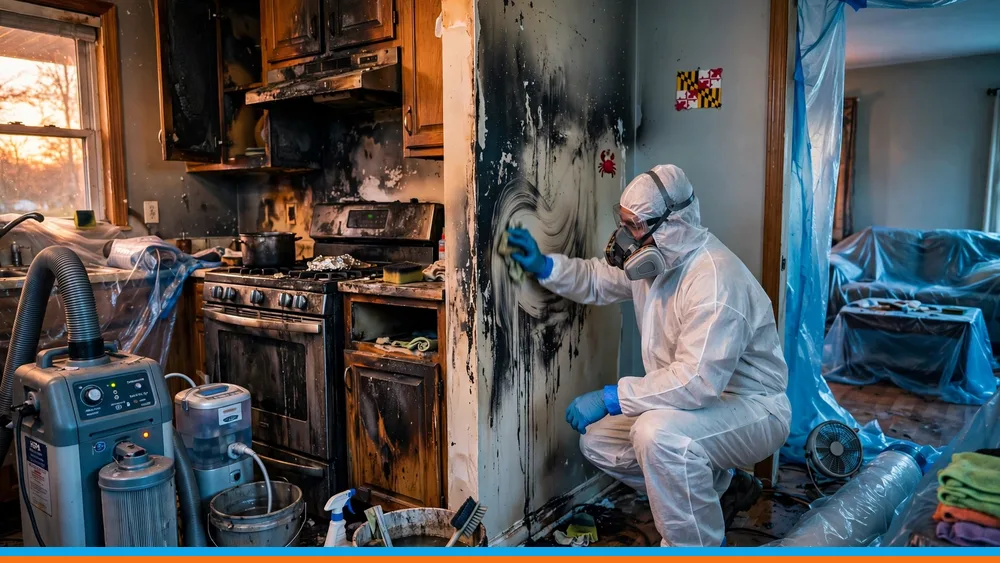
Structural drying then runs to verified targets, with antimicrobial treatment where damp material sat long enough for growth to start — a real risk when a leak has fed a dark cavity for weeks. The readings, photos and itemized scope become the claim record: a sudden hose or valve failure is the classic sudden-and-accidental loss, while a leak documented as running for months is harder to cover, which is exactly why acting and documenting the day you find it matters. We produce that record as a normal part of the job and bill carriers directly for covered work.
Prevention that fits on a Saturday morning — and when to call
Replace rubber washing-machine hoses with braided steel lines, and replace any supply line that is bulging, cracked or older than the appliance it feeds. Know where each appliance's shutoff is, add inexpensive leak alarms under the dishwasher, behind the washer and at the water heater pan, and look — actually look — at those spots a few times a year when you clean. Note the water heater's age from its label; a unit well past its expected service life is a planned replacement on your schedule, not an emergency on its own.
If you are standing in water from an appliance in Columbia right now, or you have found the soft floor and the musty cabinet that say a leak has been running for weeks, do not dry the surface and hope the story ends there. Call Eagle Water Damage Restoration at (855) 809-6899 or send the lead form on this site. We answer 24/7 from nearby Beltsville, assessments are free, and our IICRC-certified crews handle extraction, structural drying and the insurance documentation as one documented job.
Need This Handled?This guide covers Water Damage Restoration — the service behind this article. Free assessments, 24/7 response across Maryland: (855) 809-6899 or read about the service.
Water Damage Can't Wait — Neither Should You
Every hour of standing water means more damage and a bigger repair. Request your free assessment online and we'll call you back to confirm — or call now and a coordinator will dispatch a crew.