A strong Rockville water damage claim is built in the first day: dated photos, moisture readings, saved parts and receipts. Here is the record that works.
The fast answer: document before you clean, keep everything, write it down
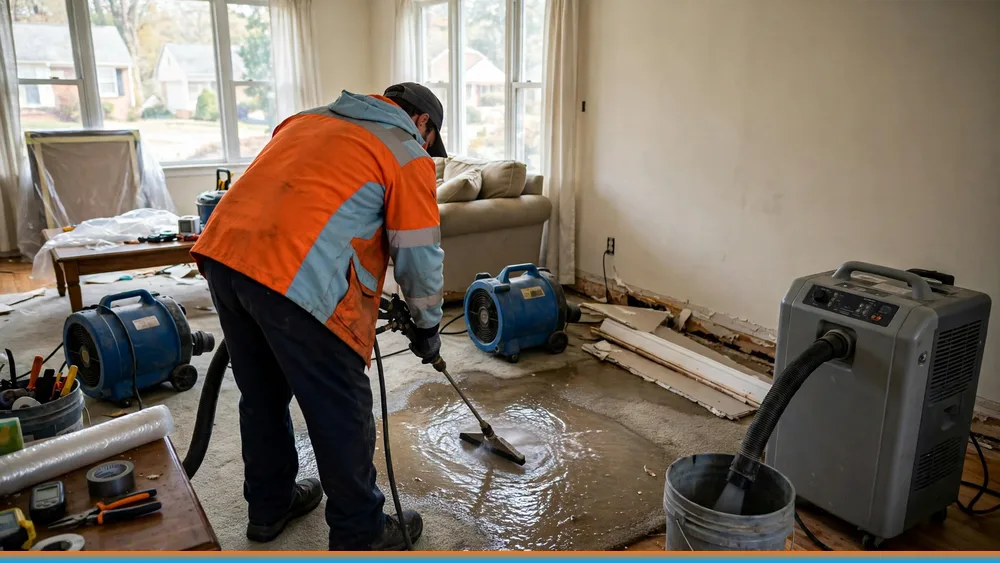
If water has damaged your Rockville home, build the claim record before cleanup changes the scene: photograph the source and every affected room, video the standing water and the waterline, save the failed part if one is replaced, and keep every receipt. Then open the claim the same day and get professional moisture readings on paper. Carriers decide on documentation, not on how wet the floor felt — and the first day is the only day the evidence looks like the loss itself.
That holds in a King Farm townhouse, a Twinbrook ranch or a condo near Rockville Town Square: a sudden burst pipe, supply line or appliance failure is the classic sudden-and-accidental loss, while slow leaks that ran for months are harder to cover. Eagle Water Damage Restoration answers 24/7 at (855) 809-6899, assessments are free, our technicians are IICRC-certified, and we bill insurance carriers directly for covered work — and the moisture log and itemized scope we produce are part of the claim record from the first visit.
Photos and video: the record only you can make in hour one
Start at the source and work outward. Photograph the split pipe, the failed hose, the water heater base or the roof opening up close, then step back for the whole room. Record the standing water, the waterline on walls, baseboards and furniture legs, and every room the water reached — including the ceiling and the room below. Take the same angles again after extraction; the before-and-after pair is what lets an adjuster see the scope without having stood in your hallway.
Use your phone's normal camera so the files keep their date and time, and do not edit, filter or delete the blurry extras until the claim is closed. Walk one slow video through the affected area narrating what you see — where the water started, when you found it, what you moved. In a Rockville condo or townhouse with shared walls, photograph where water entered from or exited to a neighbor as well, and note the building management report if one was made; whose policy carries what is far easier to settle when both sides documented the same first hour.
What to save, what to keep, and the receipts that matter
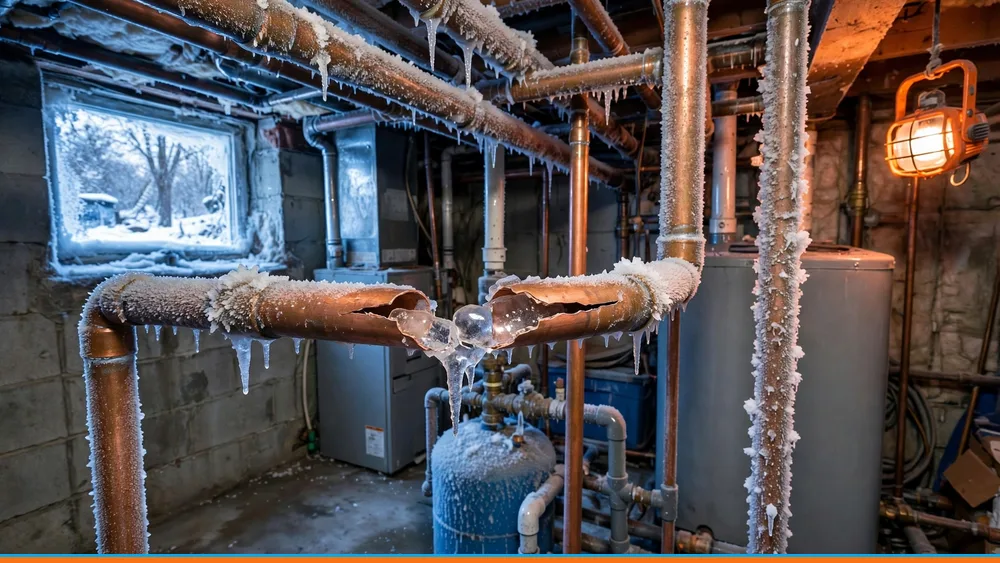
Do not throw damaged items away until they have been photographed and, where the carrier asks, inspected. Keep the failed section of pipe, the split hose or the appliance part that caused the loss — a plumber can set it aside in minutes, and it is the clearest proof of a sudden failure. Bag small damaged items if they must move, list larger ones room by room, and note roughly when each was bought if you know it; a simple list beats a memory reconstructed weeks later.
Keep receipts for every emergency cost: the plumber who stopped the leak, a pump or wet vacuum you bought, a hotel night if the home was not livable, even fans and cleaning supplies. Keep them in one folder, photograph each one, and write the date and reason on the back or in the photo caption. Emergency spending that protects the home from further damage is exactly what policies expect you to do — but only the spending you can show is the spending that counts.
The professional record: moisture readings, drying log and itemized scope
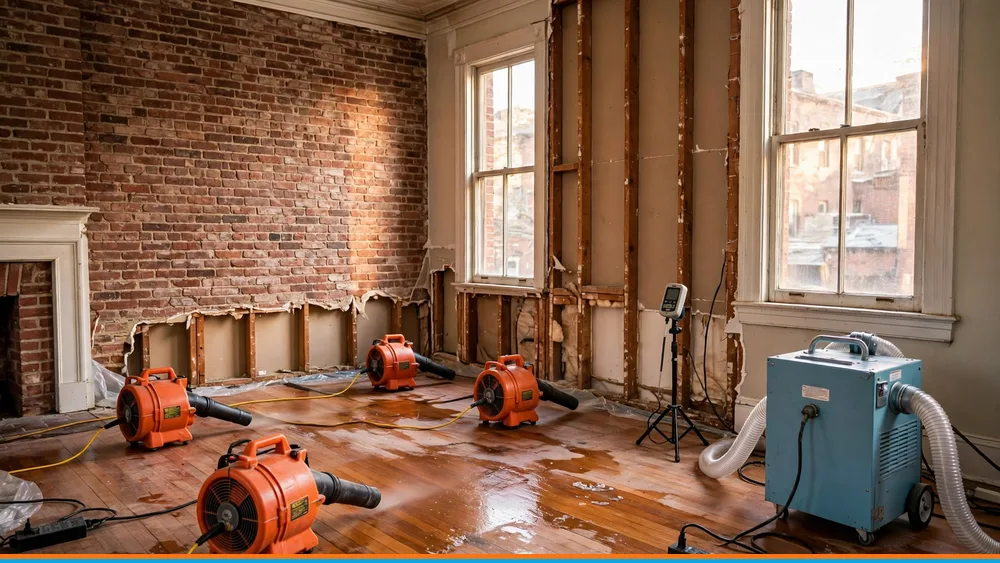
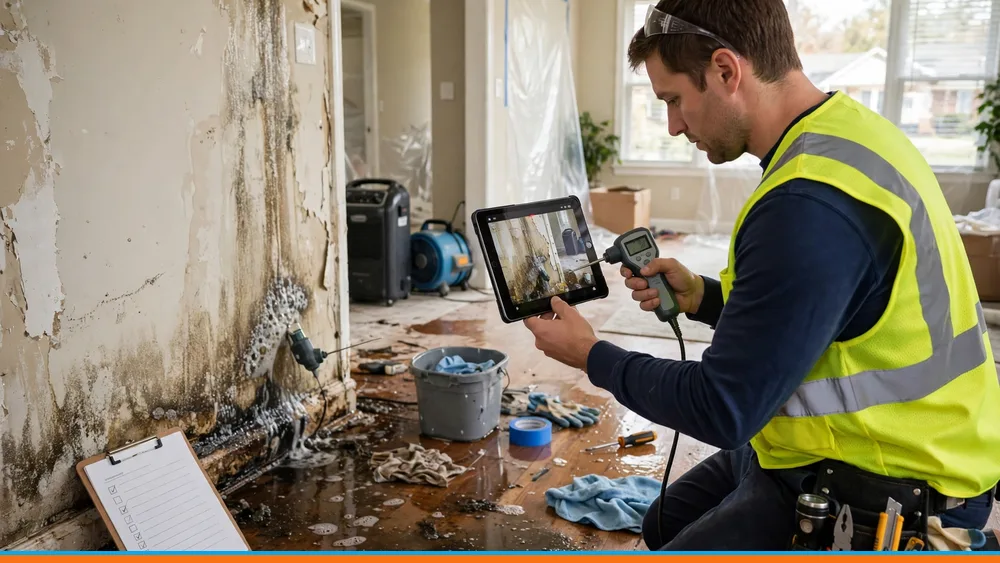
Your photos show what the loss looked like; professional readings show where the water actually went. Our technicians map moisture with meters and thermal imaging — under hardwood and vinyl, inside wall cavities, into subfloors and the ceiling below — and record the readings by material and location. Structural drying then runs to verified targets, and each return visit adds readings to the same log until every material reaches its target. That log is how a carrier can see the job was necessary, correctly sized and actually finished.
The itemized scope ties the record together: the source, the affected rooms and materials, what was extracted, what had to be removed and why, the antimicrobial treatment applied, and the equipment placed each day. Ask any restoration company you hire for that scope in writing before work expands beyond the emergency steps, and keep it with your photos and receipts. If an adjuster visits, walk the home with the scope in hand — room by room, the paper and the house should tell the same story.
Opening the claim, the adjuster visit — and mistakes that weaken a good claim
Open the claim while the details are fresh, ideally the day you find the damage, and report facts only: when you discovered it, what the source appears to be, which rooms are affected and what emergency steps were taken. Avoid guessing at a cause you have not confirmed, do not describe a sudden failure as a long leak, and do not authorize demolition or discard materials before they are documented. If coverage turns on an endorsement — sump pump and water backup losses are the common Maryland example — a complete, dated record still gives the claim its strongest footing.
If water has damaged your Rockville home today, do not clean first and document later — by then the strongest evidence is in a dumpster. Call Eagle Water Damage Restoration at (855) 809-6899 or send the lead form on this site. We answer 24/7 from nearby Beltsville, assessments are free, and we handle extraction, structural drying and the insurance documentation as one documented job, billing your carrier directly for covered work.
Need This Handled?This guide covers Water Damage Restoration — the service behind this article. Free assessments, 24/7 response across Maryland: (855) 809-6899 or read about the service.
Water Damage Can't Wait — Neither Should You
Every hour of standing water means more damage and a bigger repair. Request your free assessment online and we'll call you back to confirm — or call now and a coordinator will dispatch a crew.