Annapolis basements flood from above and below — heavy rain, high tides and a rising water table. What to do in the first hour and how finished basements are saved.
The fast answer: keep out of deep water, protect power, call early
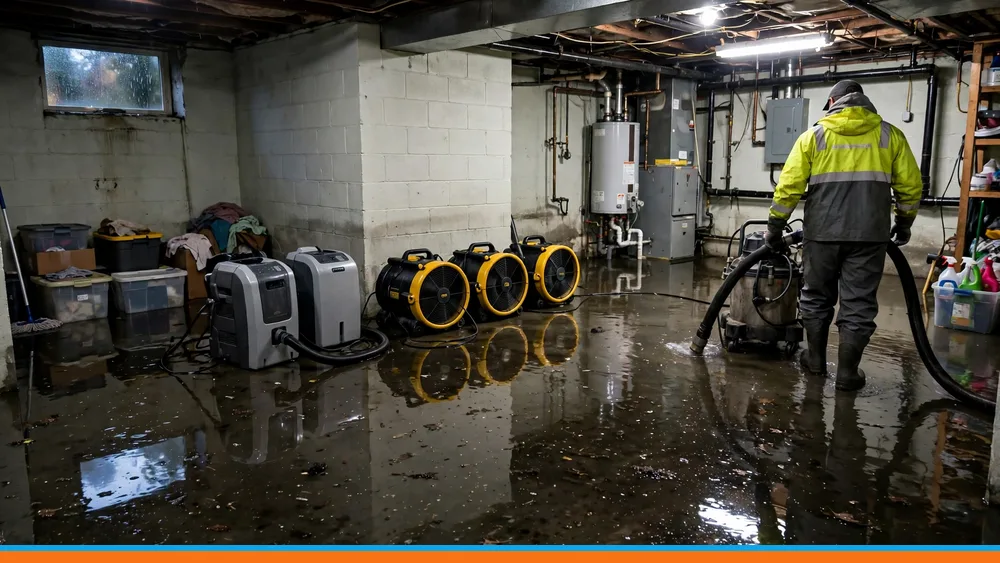
If your Annapolis basement is flooding, work in this order: keep people clear of standing water near outlets, panels or appliances, move what you can to a dry floor without wading, and get extraction started the same day. Do not wait for the rain or the tide to fall and then decide — the water already inside is soaking carpet, drywall, insulation and the framing behind finished walls while you watch the level outside go down.
Annapolis floods from two directions at once. Heavy rain overwhelms gutters, window wells and foundation drains from above, while high tides and storm surge push the water table up from below, so a basement in Eastport, West Annapolis or along a creek in Arnold can take water through the floor and the walls in the same storm. Eagle Water Damage Restoration answers 24/7 at (855) 809-6899, assessments are free, our technicians are IICRC-certified, and we bill insurance carriers directly for covered work.
Why Annapolis basements are built to collect water
Much of Annapolis sits close to the Severn River, Spa Creek, Back Creek and the Chesapeake Bay, and low lots mean the water table is never far below the slab. When a nor'easter or a tropical system parks over Anne Arundel County, groundwater rises and looks for the easiest opening: a floor crack, a cold joint where wall meets slab, a sump pit whose pump cannot keep up, or a drain that reverses when the storm system surcharges. Older homes near downtown add stone or block foundations that pass moisture steadily once the soil around them is saturated.
Finished basements raise the stakes. In neighborhoods across Annapolis, Severna Park and Edgewater, the lowest level is a family room, a guest suite or a home office — drywall, laminate or carpet over a slab, with insulation and stud walls that wick water upward well above the visible line. The puddle you see is the smallest part of the loss; the moisture map inside the wall assemblies is the real one, and it keeps growing for days after the surface looks dry.
The first hour: safety, belongings and the record
Start with hazards, not towels. If water is near electrical outlets, a wet panel or running appliances, switch off power to the affected circuits from a dry spot at the breaker box — and never stand in water to unplug anything. Stay out entirely if the water came up through a drain and may be contaminated, and keep children and pets out of the area until it has been cleaned. If the sump pump is silent, check its power and float only from dry ground; a pump that hums without moving water, or does nothing at all, has failed and will not recover on its own.
Then protect and document in that order. Move electronics, documents, photos and cardboard up first, then rugs and upholstered pieces, slipping foil or wood blocks under legs of anything too heavy to move. Photograph the standing water, the waterline on walls and furniture, the sump pit and every entry point you can find — window wells, door thresholds, floor cracks — before cleanup changes the scene. Keep receipts for any emergency spending and do not throw damaged items away until they have been photographed; that dated record is what your carrier, and a flood claim if you carry separate flood coverage, will be decided on.
What proper cleanup looks like in a finished basement
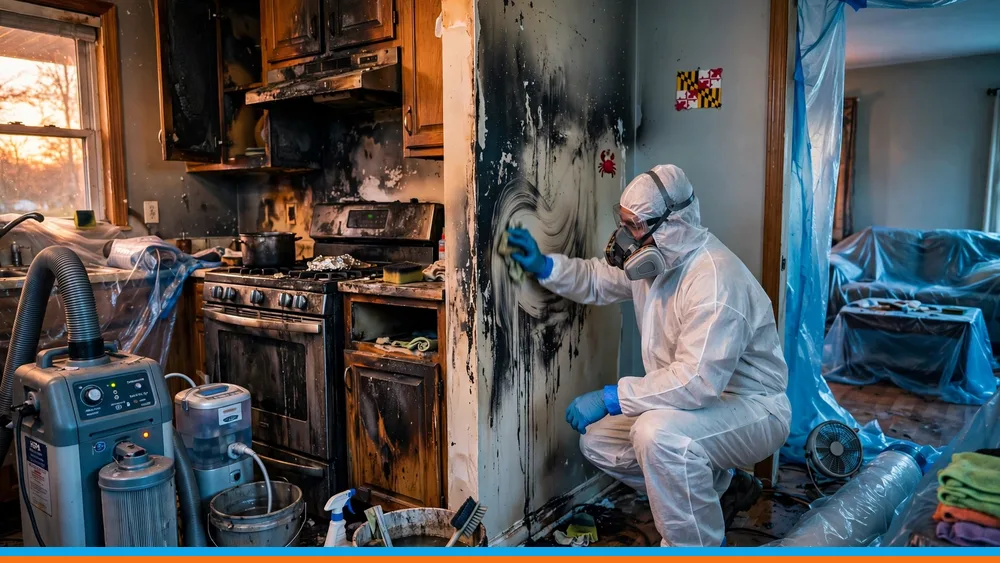
A flooded finished basement is a materials job, not a mopping job. Our crews extract the standing water, then test what the water reached: carpet and pad that sat in contaminated or tidal water usually come out, the bottom of affected drywall is opened where readings show wicking, and wet insulation is removed so the cavity can actually dry. Hard surfaces that remain are cleaned, and antimicrobial treatment is applied where the water category calls for it — tidal and drain water are never treated as clean water.
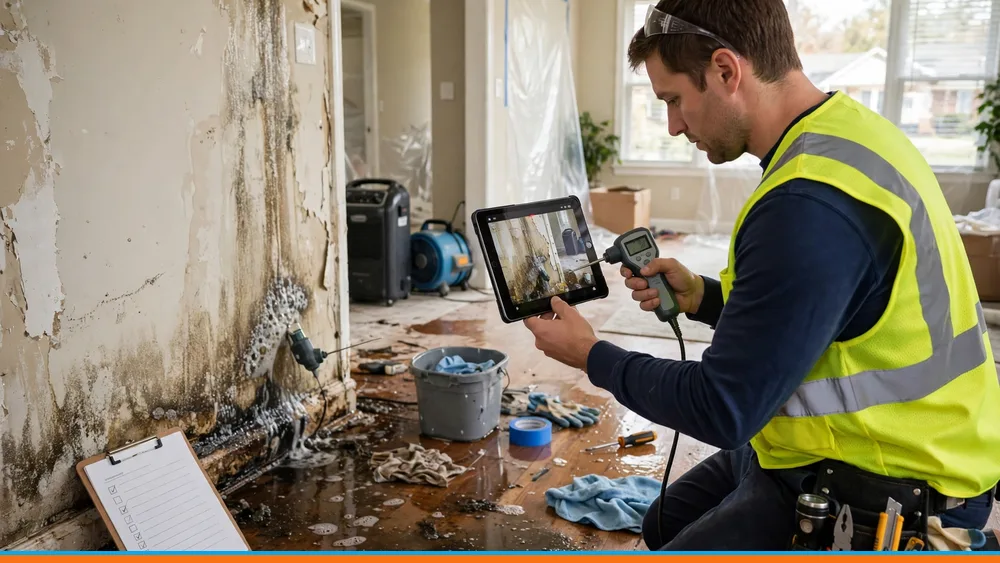
Structural drying then runs to verified targets, not to a calendar. Moisture meters and thermal imaging track the slab, the studs, the subfloor above and any adjoining rooms the water reached, and equipment is sized and adjusted until readings say each material is dry. That drying log matters twice over in Annapolis: it is how we know mold will not be growing behind a repainted wall in three weeks, and it is the record your carrier reviews. We produce the photo record, moisture log and itemized scope as a normal part of the job and bill carriers directly for covered work.
Lowering the odds of the next flood — and when to call
Once the basement is dry, fix the entry point you actually had. Keep gutters and downspouts clear and discharging well away from the foundation, seal window wells or add covers where they collect runoff, and grade soil away from the house where settling has reversed the slope. Test the sump pump by pouring water into the pit until the float cycles, and consider a battery backup pump — the storms that fill Annapolis pits fastest are the same storms that cut power — plus a water alarm that warns you while the problem is still inches deep.
Watch the quiet signs between storms too: efflorescence on block walls, a musty smell that strengthens at high tide, or baseboards swelling along one wall all say water is arriving before it pools. If your Annapolis basement is wet right now — or the tide is still rising and the pit is already full — do not wait to see how high it gets. Call Eagle Water Damage Restoration at (855) 809-6899 or send the lead form on this site. We answer 24/7 from nearby Beltsville, assessments are free, and our IICRC-certified crews handle extraction, structural drying and the insurance documentation as one documented job.
Need This Handled?This guide covers Water Damage Restoration — the service behind this article. Free assessments, 24/7 response across Maryland: (855) 809-6899 or read about the service.
Water Damage Can't Wait — Neither Should You
Every hour of standing water means more damage and a bigger repair. Request your free assessment online and we'll call you back to confirm — or call now and a coordinator will dispatch a crew.