The fire is out but the smoke smell will not leave your Columbia home. Why odor sinks into walls, fabrics and ducts — and the cleaning order that removes it for good.
The fast answer: odor is residue, not just a smell in the air
If your Columbia home still smells like smoke days or weeks after a fire, the problem is not the air — it is residue. Smoke carries tiny soot particles and oily compounds that settle into paint, drywall, carpet, upholstery, clothing and the inside of your ductwork, and they keep releasing odor long after the room looks clean. Air fresheners, open windows and a fresh coat of paint alone do not remove it; they cover it briefly while the source keeps working underneath.
Real odor removal follows an order: remove the source material that cannot be cleaned, clean soot from hard surfaces with the right method for the type of smoke, deep-clean or remove soft materials that absorbed it, treat the HVAC system if smoke reached it, and only then seal and repaint. Eagle Water Damage Restoration answers 24/7 at (855) 809-6899, assessments are free, our technicians are IICRC-certified, and we bill insurance carriers directly for covered work.
Why Columbia homes hold smoke odor so stubbornly
Smoke does not stay in the room where the fire burned. Hot smoke rises and spreads under pressure, pushing particles into wall cavities, attic insulation, closets and rooms with no visible damage at all — which is why a kitchen fire in a Columbia townhouse in Kings Contrivance or a condo near Lake Kittamaqundi can leave a bedroom two floors up smelling strongest. Cooler surfaces attract the residue, so exterior walls, windows and the inside of ductwork collect more of it.
The type of fire matters too. A fast, hot fire burning synthetic materials — plastics, foam, modern furniture — leaves a greasy, acidic soot that smears when it is wiped the wrong way and clings to surfaces. A slow, smoldering fire leaves a heavier, wetter residue and a stronger odor that penetrates deeper into fabrics and wood. Protein fires from cooking leave a nearly invisible film that smells far worse than it looks. Each type needs a different cleaning approach, and using a wet method on dry soot — or the reverse — can set the residue permanently.
What homeowners can safely do — and what makes it worse
Start by ventilating when weather allows and removing loose items that are clearly unsalvageable, photographing everything first for your claim. Wash washable fabrics promptly, and keep receipts for any professional laundry or dry cleaning, which uses odor-specific treatment ordinary washing does not. Stay out of heavily affected areas if breathing feels irritated, and keep children and anyone with asthma away until the space has been cleaned.
Avoid the common mistakes that lock odor in. Do not repaint over soot or odor without cleaning and sealing first — paint traps the residue underneath and the smell returns on the first warm, humid Maryland day. Do not run the HVAC system through affected ductwork before it is checked, because the system can distribute residue to clean rooms. Do not scrub soot with a household sponge and cleaner: on many surfaces that smears the film wider and drives it deeper. And do not rely on scented sprays or candles; at best they mask the odor for an hour, and the mix of fragrance and smoke often smells worse than the smoke alone.
How professional smoke and odor removal actually works
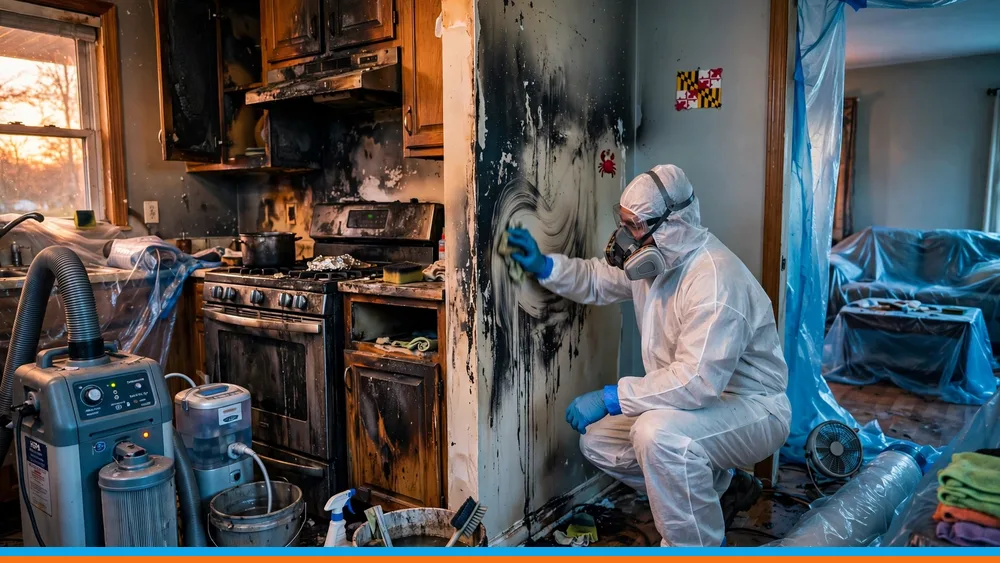
Our crews start with the source. Charred material and items that cannot be restored are removed, because no treatment succeeds while the strongest source is still in the room. Hard surfaces are then cleaned with methods matched to the soot type — dry chemical sponges for dry soot, wet cleaning for greasy residue — working from the least affected areas toward the source so residue is not spread. Contents are handled item by item: some clean on site, some go out for specialized cleaning, and porous items that absorbed heavy residue are documented for the claim when cleaning cannot restore them.
With the residue gone, deodorizing can finally work. Depending on the loss, that can include thermal fogging or other professional treatments that reach the same cavities smoke reached, cleaning of the duct system when smoke entered it, and finally a sealant on surfaces that need it before repainting — in that order, never instead of cleaning. The test is simple and honest: a properly treated Columbia home smells neutral on a warm day with the windows closed, not just on the cool morning after the crew leaves.
Insurance, timing — and when to call
Smoke damage is part of most fire losses, including rooms the flames never touched, so document odor and soot room by room with photos and keep the damaged items until they have been recorded. Odor work is far easier in the first days, before residue has had weeks to bond with paint and fabrics and before well-meant home cleaning has smeared it. If the smell in your Columbia home is getting stronger instead of weaker, that is information: the source is still present somewhere — a cavity, a duct run, a piece of furniture — and finding it is the job.
If your Columbia home still smells like smoke after a fire, do not paint over it and hope. Call Eagle Water Damage Restoration at (855) 809-6899 or send the lead form on this site. We answer 24/7 from nearby Beltsville, assessments are free, and our IICRC-certified crews handle soot cleaning, odor removal and the insurance documentation as one documented job, billing your carrier directly for covered work.
Need This Handled?This guide covers Fire Damage Restoration — the service behind this article. Free assessments, 24/7 response across Maryland: (855) 809-6899 or read about the service.
Water Damage Can't Wait — Neither Should You
Every hour of standing water means more damage and a bigger repair. Request your free assessment online and we'll call you back to confirm — or call now and a coordinator will dispatch a crew.