Maryland cold snaps freeze pipes in garages, crawl spaces and exterior walls, then thaw them into floods. How to prevent a burst and act fast if one lets go.
The fast answer: protect the vulnerable runs, and shut off fast if one bursts
If a Maryland cold snap is coming, protect the pipes that run through unheated space first: insulate lines in garages, crawl spaces and exterior walls, keep the heat on even when you travel, and open cabinet doors under sinks on outside walls so warm room air reaches the plumbing. If a pipe does burst, close the main shutoff immediately — in most Maryland homes it sits where the water line enters the house, usually in the basement near the front wall — then switch off power to any wet circuits and call for extraction the same hour.
That order holds in Beltsville, Baltimore, Frederick, Annapolis and Rockville alike: the freeze itself rarely floods a home, the thaw does, when a split pipe that was silent under ice opens under full pressure and nobody is watching. Photograph the split, the standing water and every affected room before cleanup, and keep the damaged pipe section if it is replaced. Eagle Water Damage Restoration answers 24/7 at (855) 809-6899, assessments are free, and we bill insurance carriers directly for covered work.
Why Maryland pipes freeze in predictable places
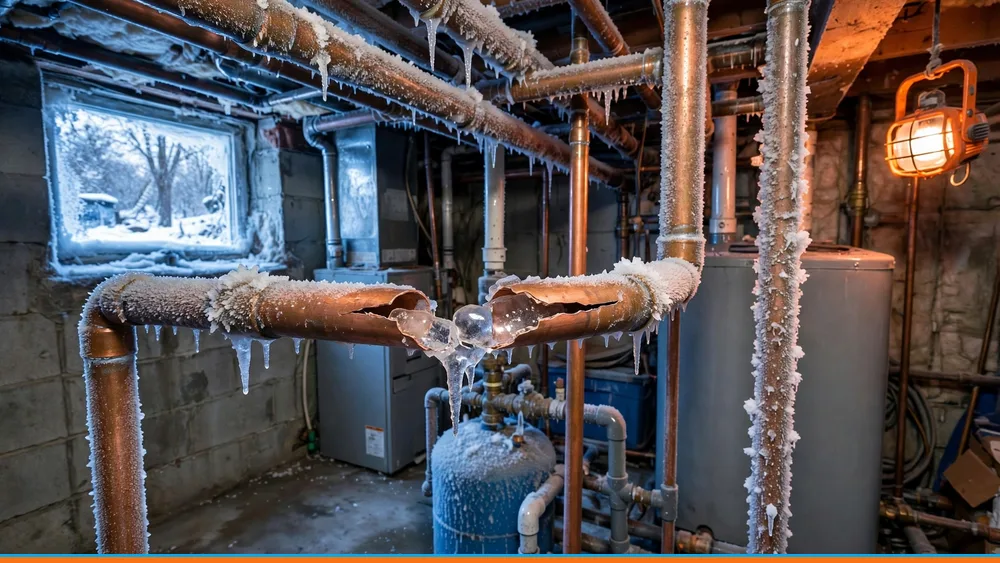
Water expands as it freezes, and in a closed pipe that expansion has nowhere to go. Pressure builds between the ice blockage and the faucet until the pipe wall splits — often not at the frozen spot itself, but somewhere along the pressurized run. That is why a burst can appear in a warm room while the freeze that caused it sits in a cold crawl space two walls away, and why the leak may not start until temperatures rise and the ice plug melts.
The vulnerable runs are the same in most Maryland homes: pipes in unheated garages and crawl spaces, lines inside exterior walls with little insulation, outdoor hose bibs and their supply lines, and plumbing in vacant or lightly heated spaces — a guest bath nobody uses, a laundry room over an unheated garage in Columbia or Silver Spring, a seasonal kitchen in an older Baltimore rowhouse. Wind matters as much as the thermometer: a windy night pulls heat from exterior walls far faster than a calm night at the same temperature, which is why pipes that survived last winter can fail on one sharp, gusty night.
Prevention that works before the cold snap
Start with insulation where it counts. Foam sleeves on pipes in garages, crawl spaces and basements are inexpensive and take an afternoon, and exterior-wall runs deserve attention whenever a wall is open for other work. Disconnect garden hoses before the first hard freeze, close the interior valve to each hose bib and open the outside faucet to drain it — a hose left connected traps water in the bib and the short run behind it, one of the most common winter bursts we see.
During the snap itself, keep the thermostat at a consistent temperature day and night, even when you travel — a house allowed to go cold to save heating costs is a house shopping for a burst pipe. Open cabinet doors under sinks on exterior walls, and on the coldest nights let a vulnerable faucet drip slowly: moving water is harder to freeze, and an open faucet relieves pressure if a blockage does form. Know where your main shutoff is and test that it turns before you need it at midnight with water running down a wall. If a shutoff has not moved in years, have it serviced on a calm day.
The signs a pipe is frozen — and the safe way to respond
A frozen pipe usually announces itself quietly: a faucet that gives only a trickle or nothing at all on a cold morning, frost visible on an exposed line, or an unheated room that smells faintly musty after a thaw. If you suspect a freeze, keep the faucet open and apply gentle warmth to the accessible section — a hair dryer on a low setting, warm towels, or a space heater kept well clear of anything flammable and never left unattended. Work from the faucet back toward the cold spot so melting water has somewhere to go.
Never use a torch, a kerosene heater or any open flame on a pipe — that is how a water problem becomes a fire problem. Do not ignore a trickle faucet and hope the afternoon fixes it: a pipe can already be split behind the wall, waiting for the ice to clear. And if water appears where it should not — a ceiling stain spreading, a wall that sounds like it is running, a meter that spins with every faucet closed — stop trying to thaw and treat it as a burst: shut off the main, keep people clear of wet electrical areas and sagging ceilings, and call for help.
After a burst: drying, documentation and keeping mold out
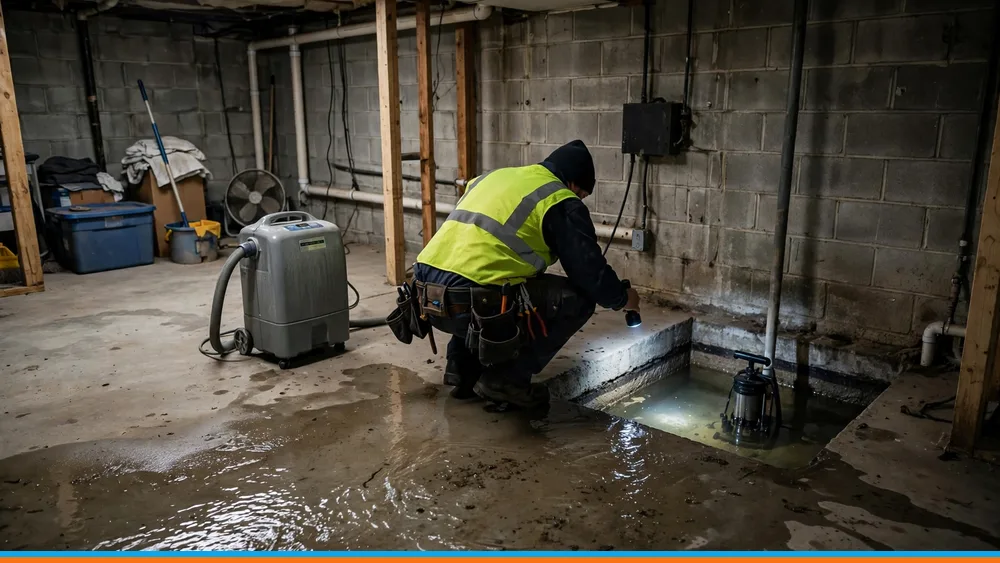
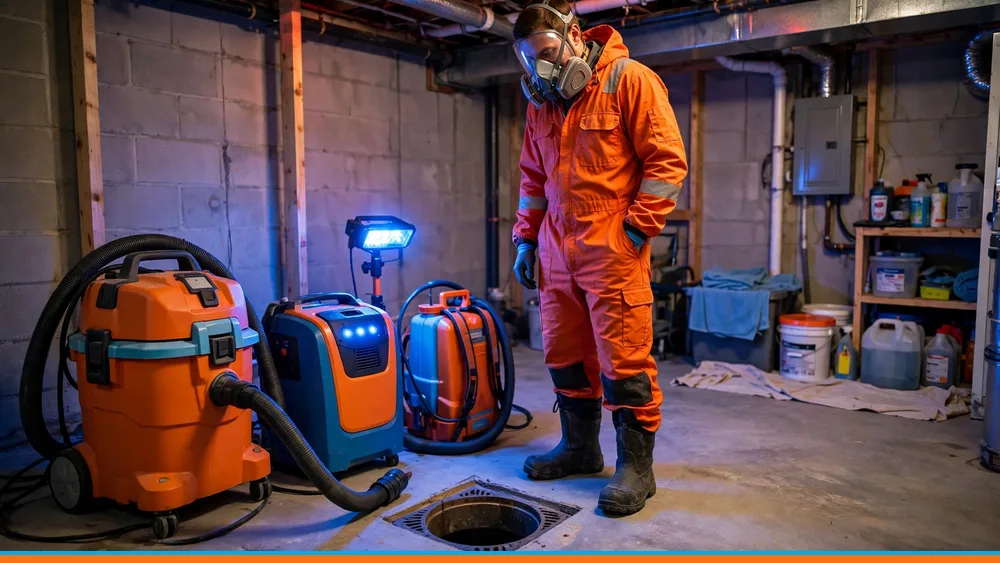
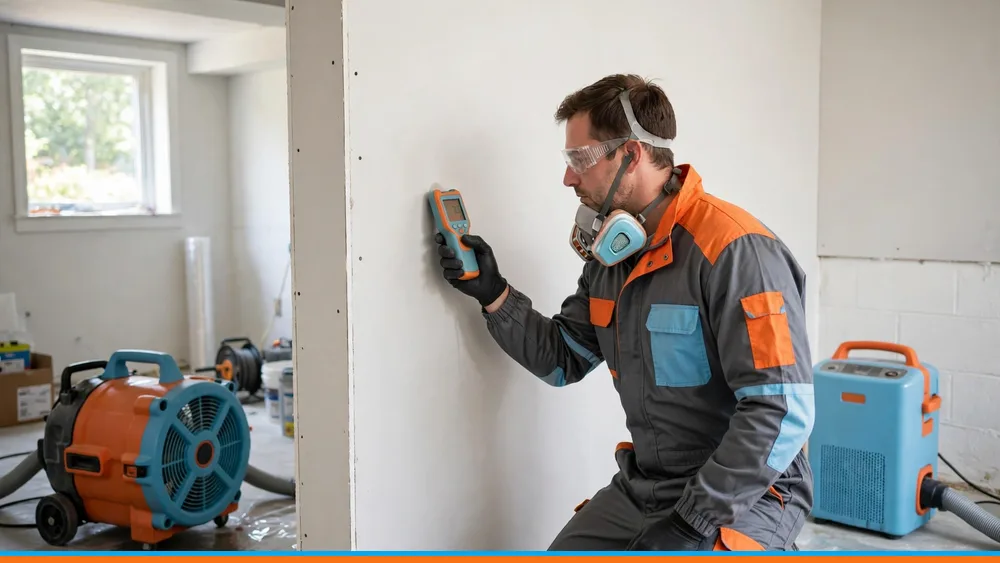
A burst pipe can release a large volume of water into walls and floors before anyone notices, and what happens next decides whether the job stays a drying job. Our IICRC-certified technicians map where the water traveled with moisture meters and thermal imaging — under hardwood and vinyl, inside wall cavities, into the ceiling and room below — extract standing water, remove material that cannot be safely dried, and run structural drying to verified targets for each material. A wall that feels dry can still hold enough moisture in studs and insulation to grow mold within days in a heated home, which is why the job ends with readings, not appearances.
Document as you go: the split pipe, the source room, the waterline and every affected space, plus receipts for emergency work. A sudden winter burst is the classic sudden-and-accidental loss, and a complete photo record, moisture log and itemized scope give the claim its strongest footing — we produce that record as a normal part of the job and bill carriers directly for covered work. If a pipe has burst in your Maryland home, or a faucet has gone to a trickle in a hard freeze, call Eagle Water Damage Restoration at (855) 809-6899 or send the lead form on this site. We answer 24/7 from Beltsville, assessments are free, and our crews handle extraction, structural drying and the insurance documentation as one documented job.
Need This Handled?This guide covers Water Damage Restoration — the service behind this article. Free assessments, 24/7 response across Maryland: (855) 809-6899 or read about the service.
Water Damage Can't Wait — Neither Should You
Every hour of standing water means more damage and a bigger repair. Request your free assessment online and we'll call you back to confirm — or call now and a coordinator will dispatch a crew.