Water in a Silver Spring home spreads fast — into the unit below, the wall cavity, the subfloor. The first-response steps that protect condos and colonials alike.
The fast answer: stop it, stay safe, document, call
If water is spreading through your Silver Spring home right now, work in this order: keep people clear of electrical hazards, stop the water at the closest valve, photograph everything before you move it, and get extraction started the same day. Do not wait to see whether it dries on its own — in a heated Maryland home, water keeps wicking into subfloors, wall cavities and insulation for days after the surface looks calm, and mold can begin growing on damp material within a day or two.
Silver Spring adds one twist most towns do not: much of the housing stock shares walls, floors or ceilings with a neighbor. A supply line that fails in a downtown condo can be raining into the unit below before the owner upstairs knows anything is wrong. The first response is the same everywhere — but here, who else you notify is part of it. Eagle Water Damage Restoration answers 24/7 at (855) 809-6899, assessments are free, our technicians are IICRC-certified, and we bill insurance carriers directly for covered work.
Three housing types, three ways water travels
Downtown and along Georgia Avenue, Silver Spring's condos and apartment buildings stack homes on top of each other, so gravity writes the damage report: a failed washing-machine hose on the sixth floor becomes a ceiling stain on the fifth and a wall problem on the fourth. In a multi-unit building, your unit's shutoff may sit in a utility closet or behind an access panel, and building management needs to hear about the leak immediately — they may control the riser valve that stops it, and the units below yours need warning while their ceilings are still dry.
The single-family neighborhoods — Woodside, Forest Glen, Four Corners, Kemp Mill — carry the other two patterns. Older colonials and Cape Cods often have plumbing repaired in sections over decades, with shutoff valves that have not moved in years; test yours on a calm day, because a valve that will not turn at midnight is a discovery you did not need. Split-levels hide the third pattern: a leak on the upper level runs down inside a wall and shows up in the lower-level family room, sometimes rooms away from the source — which is why the moisture map matters more than the puddle.
The first hour: safety checks and the shutoffs that matter
Start with hazards, not towels. If water is near outlets, a wet panel or a running appliance, switch off power to the affected circuits at the breaker box — and never stand in water to unplug anything or reach a valve. Stay out from under sagging or bulging ceilings, which can be holding pooled water overhead. If the water smells of sewage or came up through a drain, keep children and pets out of the area entirely and treat it as a biohazard cleanup, not a mopping job.
Then stop the source. Most sinks, toilets, washing machines and water heaters have their own shutoff close by; if that valve is missing, stuck or out of reach, go to the main shutoff where the water line enters the house — in most Silver Spring homes, in the basement or utility room near the front wall — and turn it clockwise until the flow stops. In a condo, if you cannot find your unit's valve, call building management or the front desk before the main: they can close the riser and document the incident for every affected unit at once.
What to move, what to photograph, and who else to call
Once the water has stopped, document before you disturb. Walk the home with your phone and record the source, the standing water, the waterline on walls and baseboards, and every affected room and item. In a multi-unit building, photograph the ceiling or wall where water entered from a neighbor as well — whose insurance carries what is far easier to sort out when both sides have a dated record from the first hour. Keep receipts for any emergency spending and do not throw damaged items away until they have been photographed.
Move belongings in order of fragility: electronics and documents first, then upholstered furniture and rugs, then cardboard boxes, which wick water and collapse fast. Get items fully out of the wet zone, and slip foil or wood blocks under the legs of anything too heavy to move. Then make the calls: your carrier while the details are fresh, your downstairs neighbor or building management if the water crossed a shared surface, and a restoration company the same day. Do not use a household vacuum on standing water, do not run fans in a sewage loss, and do not tear into walls yourself — hidden wiring and hazardous materials can both be waiting behind the drywall.
When the crew arrives — and how the first day should end
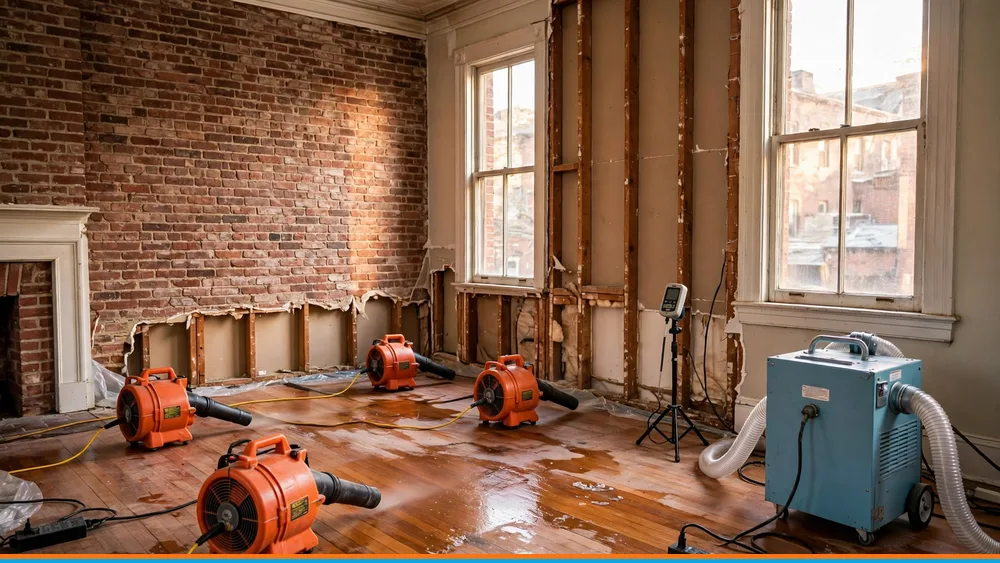
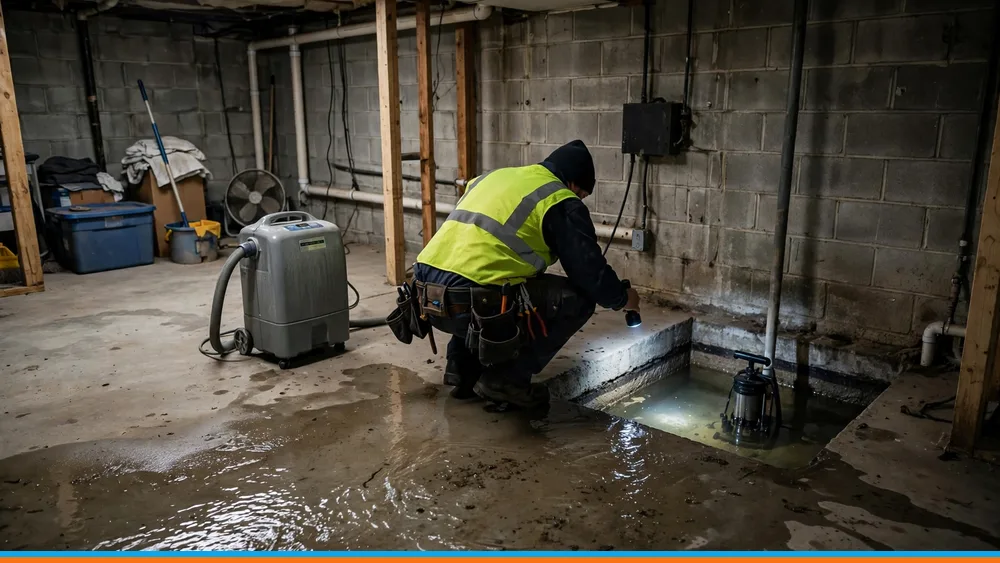
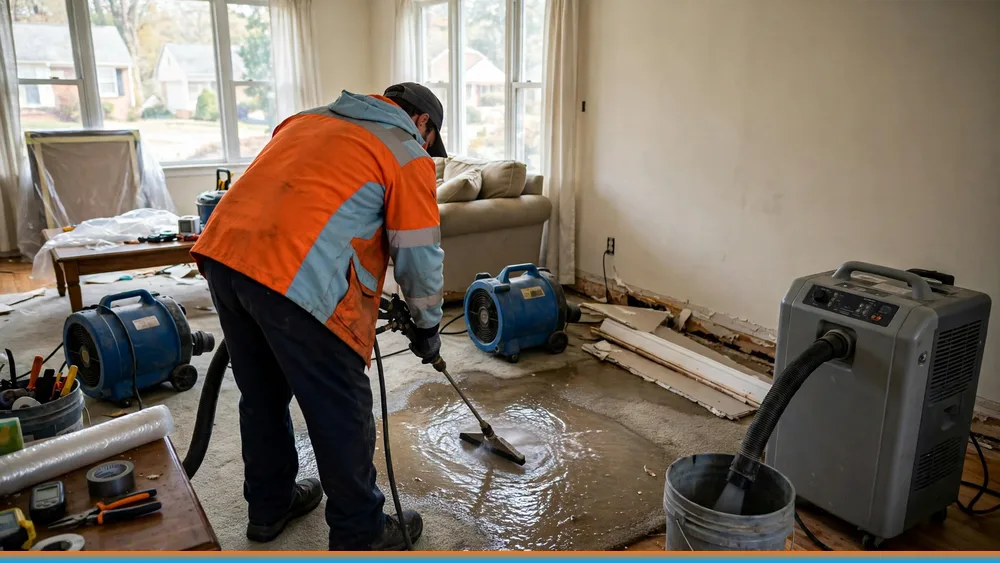
A proper first response is measured, not guessed. Our IICRC-certified technicians map where the water actually traveled with moisture meters and thermal imaging — under hardwood and vinyl, inside wall cavities, into the ceiling and the unit below — extract the standing water, remove material that cannot be safely dried, apply antimicrobial treatment where it is needed, and set structural drying to verified targets for each material. The job ends with readings, not appearances, and the moisture log, photo record and itemized scope we produce are the same documents your carrier — or your condo association — reviews.
A good first day ends with three things in place: the source repaired or safely isolated, a drying plan running with equipment sized to the loss, and a complete record for the claim. Silver Spring homes that get those three things in the first 24 hours usually dry in days and keep most of their floors and walls; homes that wait a week often add mold remediation and demolition to the same original leak. If water has hit your Silver Spring home today, do not wait to see how bad it gets — it is already moving. Call Eagle Water Damage Restoration at (855) 809-6899 or send the lead form on this site. We answer 24/7 from nearby Beltsville, assessments are free, and we handle extraction, structural drying, cleanup and the insurance documentation as one documented job.
Need This Handled?This guide covers Water Damage Restoration — the service behind this article. Free assessments, 24/7 response across Maryland: (855) 809-6899 or read about the service.
Water Damage Can't Wait — Neither Should You
Every hour of standing water means more damage and a bigger repair. Request your free assessment online and we'll call you back to confirm — or call now and a coordinator will dispatch a crew.