Water in a Baltimore home moves fast — through party walls, plaster and old hardwood. The first-24-hours response that limits the loss in rowhouses and detached homes alike.
The fast answer: stop it, stay safe, document, call the same day
If water is spreading through your Baltimore home right now, work in this order: keep people clear of electrical hazards, stop the water at the closest valve or the main shutoff, photograph everything before you move it, and get extraction started the same day. Do not wait to see whether it dries on its own — water keeps wicking into party walls, plaster, subfloors and insulation for days after the surface looks calm, and mold can begin growing on damp material within a day or two.
Baltimore adds a twist most suburbs do not: much of the city shares walls, floors or ceilings with a neighbor. A supply line that fails in a Canton or Federal Hill rowhouse can be soaking the party wall next door before either owner knows anything is wrong, and a leak on an upper floor in Hampden can appear in the ceiling below rooms away from the source. Eagle Water Damage Restoration answers 24/7 at (855) 809-6899, assessments are free, our technicians are IICRC-certified, and we bill insurance carriers directly for covered work.
How water travels in Baltimore homes — rowhouses and beyond
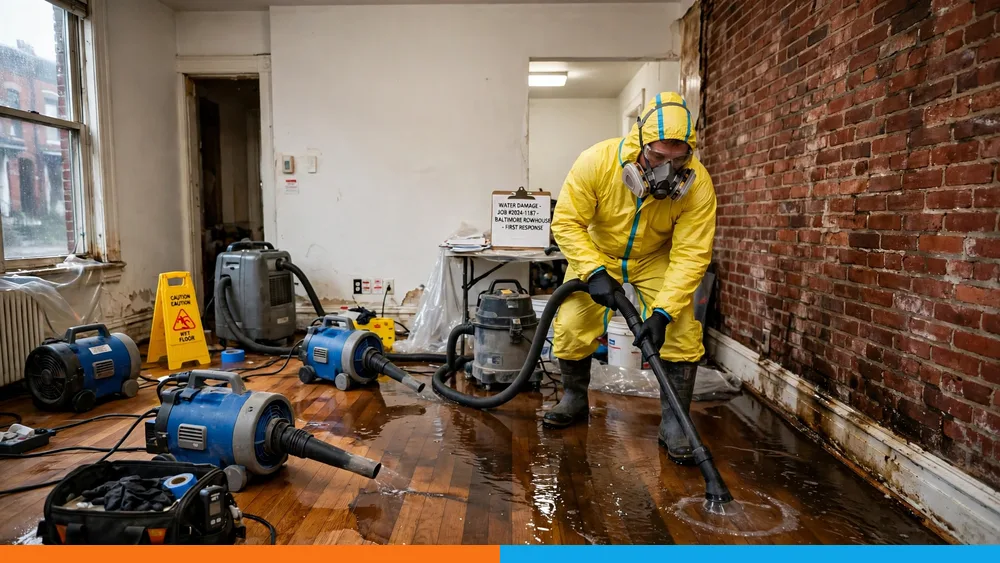
In an attached rowhouse, the two long walls are shared brick party walls, and brick and mortar absorb water and release it slowly. Water that enters a floor assembly can travel along joists pocketed into that brick and show up far from the leak, while plaster-and-lath walls drink moisture slowly and give it back even more slowly. That is why the puddle is a poor guide in Baltimore: the moisture map inside the walls and floors is the real damage report.
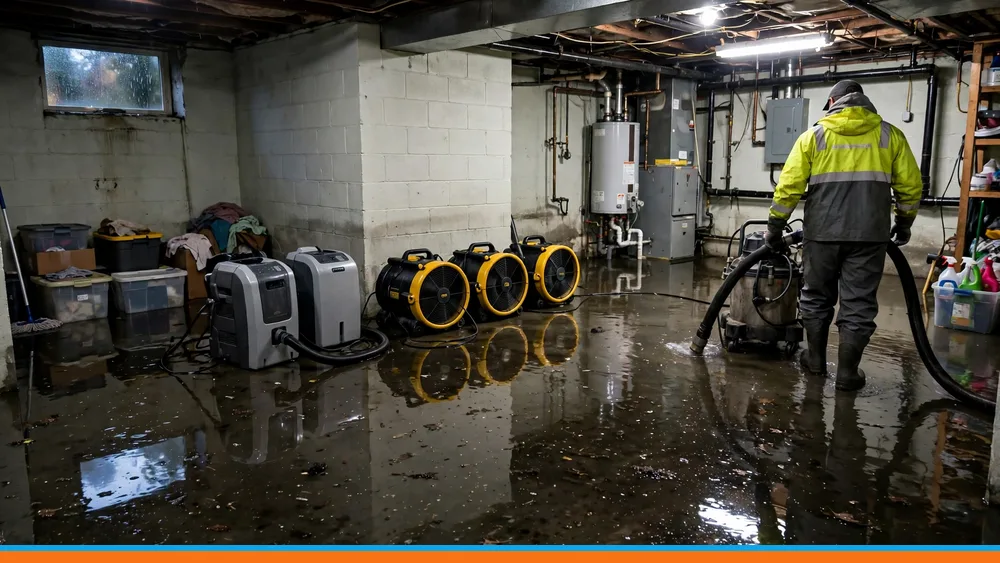
Detached and semi-detached homes across Baltimore — in neighborhoods from Roland Park and Hamilton to Dundalk and Catonsville on the city edges — carry the other common pattern: older plumbing repaired in sections over decades, shutoff valves that have not moved in years, and basements where a water heater, laundry or sump failure can cover a finished lower level before anyone goes downstairs. In both housing types, the first day decides whether the job stays a drying job or grows into demolition and mold work.
The first hour: safety checks and the shutoffs that matter
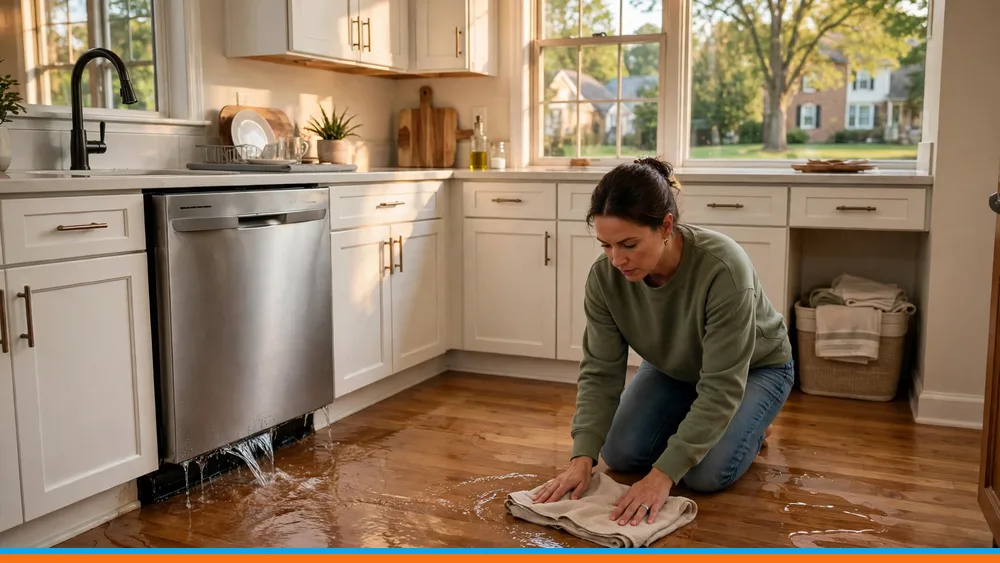
Start with hazards, not towels. If water is near outlets, a wet panel or a running appliance, switch off power to the affected circuits from a dry spot at the breaker box — and never stand in water to unplug anything or reach a valve. Stay out from under sagging or bulging ceilings, which can be holding pooled water overhead. If the water smells of sewage or came up through a drain, keep children and pets out of the area entirely and treat it as a contaminated cleanup, not a mopping job.
Then stop the source. Most sinks, toilets, washing machines and water heaters have their own shutoff close by; if that valve is missing, stuck or out of reach, go to the main shutoff where the water line enters the house — in most Baltimore homes, in the basement near the front wall — and turn it until the flow stops. In a rowhouse, tell your neighbors early if water reached a shared wall: it protects their home, and if their side shows damage, both claims are stronger when the source and timeline are documented from day one.
What to move, what to photograph, and what proper drying looks like
Once the water has stopped, document before you disturb. Walk the home with your phone and record the source, the standing water, the waterline on walls and baseboards, and every affected room and item — including the ceiling and the room below. Move belongings in order of fragility: electronics and documents first, then upholstered furniture and rugs, then cardboard boxes, which wick water and collapse fast. Keep receipts for any emergency spending and do not throw damaged items away until they have been photographed; that dated record is what your carrier will decide on.
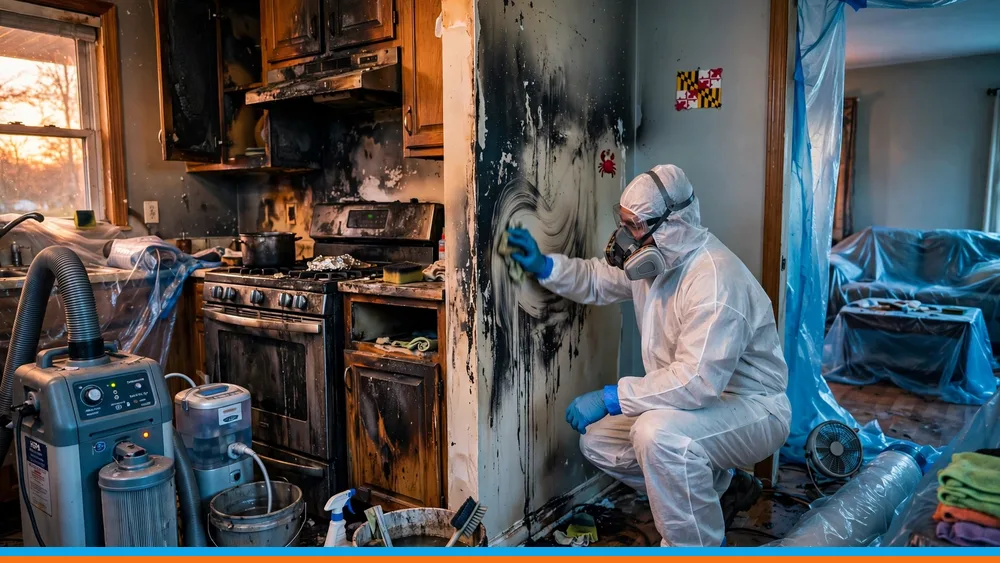
A proper response is measured, not guessed. Our technicians map where the water actually traveled with moisture meters and thermal imaging — under hardwood and vinyl, inside party walls and plaster cavities, into subfloors and the ceiling below — extract the standing water, remove material that cannot be safely dried, apply antimicrobial treatment where it is needed, and run structural drying to verified targets for each material. The job ends with readings, not appearances, and the moisture log, photo record and itemized scope we produce are the same documents your carrier reviews.
How the first day should end — and when to call
A good first day in Baltimore ends with three things in place: the source repaired or safely isolated, a drying plan running with equipment sized to the loss, and a complete record for the claim. Homes that get those three things in the first 24 hours usually dry in days and keep most of their floors and walls; homes that wait a week often add mold remediation and demolition to the same original leak. Watch for the quiet warnings in the days after, too — a musty smell that strengthens, baseboards swelling along one wall, or a party wall that stays damp to the touch all say water is still present somewhere.
If water has hit your Baltimore home today, do not wait to see how bad it gets — in an attached home it is already moving sideways, and in any home it is already moving down. Call Eagle Water Damage Restoration at (855) 809-6899 or send the lead form on this site. We answer 24/7 from nearby Beltsville, assessments are free, and our IICRC-certified crews handle extraction, structural drying, cleanup and the insurance documentation as one documented job.
Need This Handled?This guide covers Water Damage Restoration — the service behind this article. Free assessments, 24/7 response across Maryland: (855) 809-6899 or read about the service.
Water Damage Can't Wait — Neither Should You
Every hour of standing water means more damage and a bigger repair. Request your free assessment online and we'll call you back to confirm — or call now and a coordinator will dispatch a crew.